

The Department of Horticulture investigates all stages of plant growth and development using both traditional knowledge and modern scientific approaches. Our research is primarily focused on applied aspects, including varietal development and the improvement of cultivation technologies to enhance productivity, sustainability, and climate resilience.
We aim to develop superior crop varieties through advanced techniques such as tissue culture, conventional and molecular breeding, and biotechnology. In addition, the Department has strong expertise in grafting technologies, enabling the production of high-quality planting materials with improved vigor, stress tolerance, and disease resistance.
Postharvest management is another key research area, where we develop innovative technologies to ensure safe food, extend shelf life, reduce postharvest losses, and improve storage and processing systems for horticultural produce. Furthermore, we emphasize strengthening plant immunity through the use of natural biostimulants, including plant extracts and beneficial microorganisms, to enhance resilience against biotic and abiotic stresses in an environmentally friendly manner.
The Department is also actively integrating emerging technologies such as artificial intelligence (AI) and precision agriculture tools for smart crop management, disease detection, yield prediction, and decision support systems. Alongside this, we promote soilless cultivation systems including hydroponics and aeroponics, as well as urban horticulture practices like roof gardening, to ensure efficient resource use, year-round production, and sustainable food systems in both rural and urban environments.
Through well-designed experiments, advanced technologies, and field-based research, we continuously strive to increase crop yield, quality, and overall production efficiency, contributing to sustainable horticulture and national food security.

Achievements
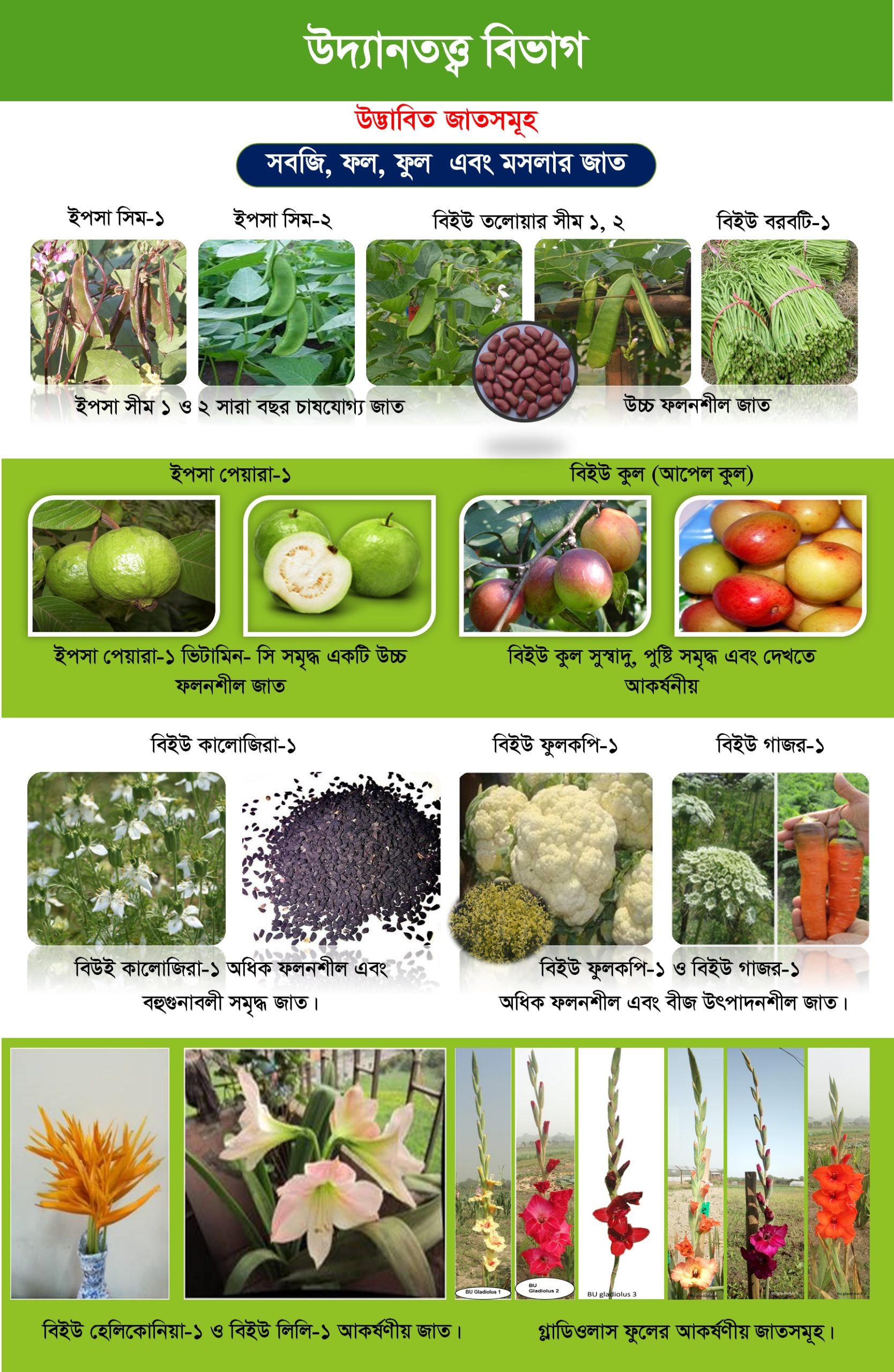
A. Fruits, Vegetables, Flowers, and Spices Varieties
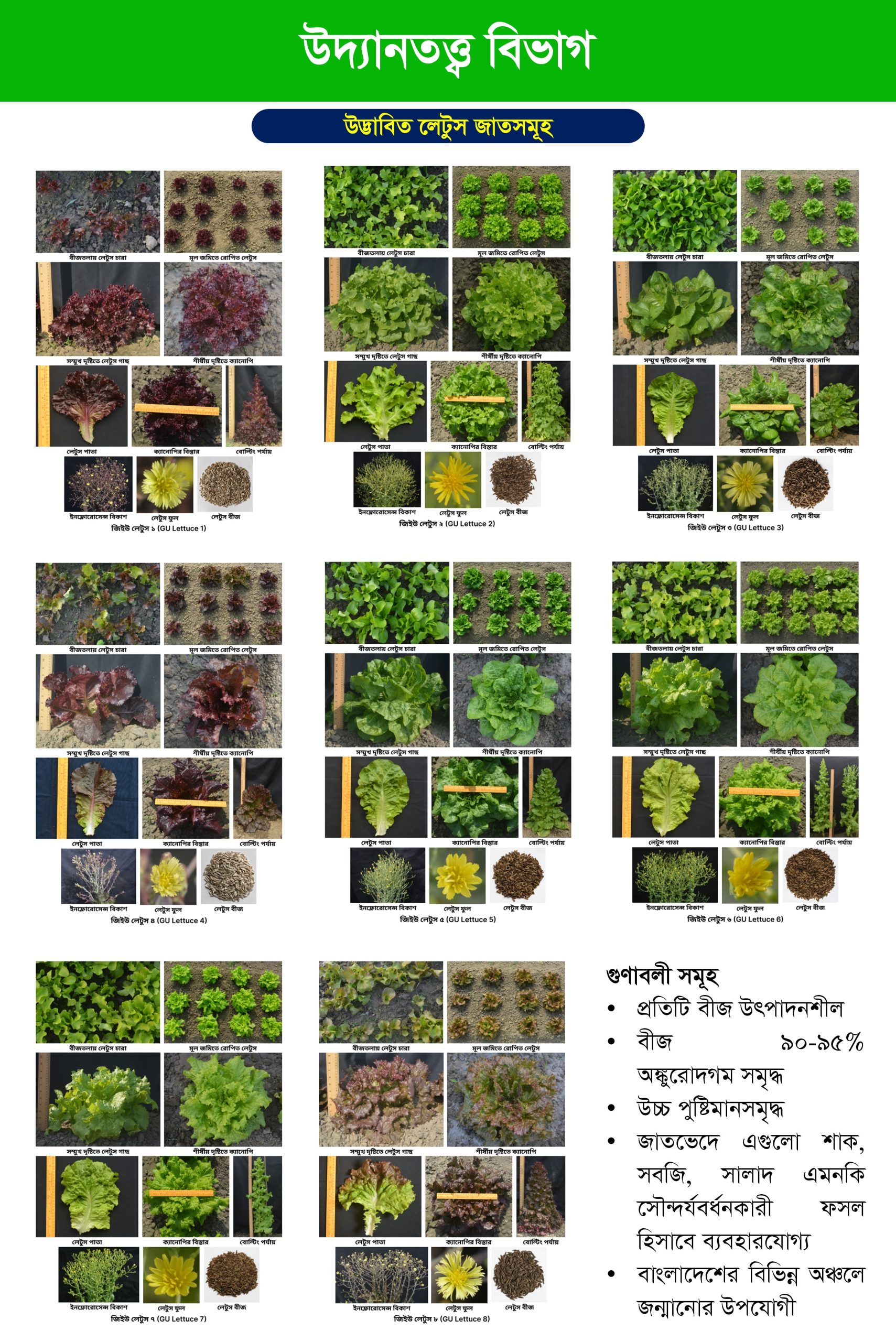
B. Lettuce Varieties
C. Technologies
D. MS and PhD Thesis titles since 1987-2024 (by courtesy of Prof. Dr. M. Mizanur Rahman)
Ongoing and Future Focuses
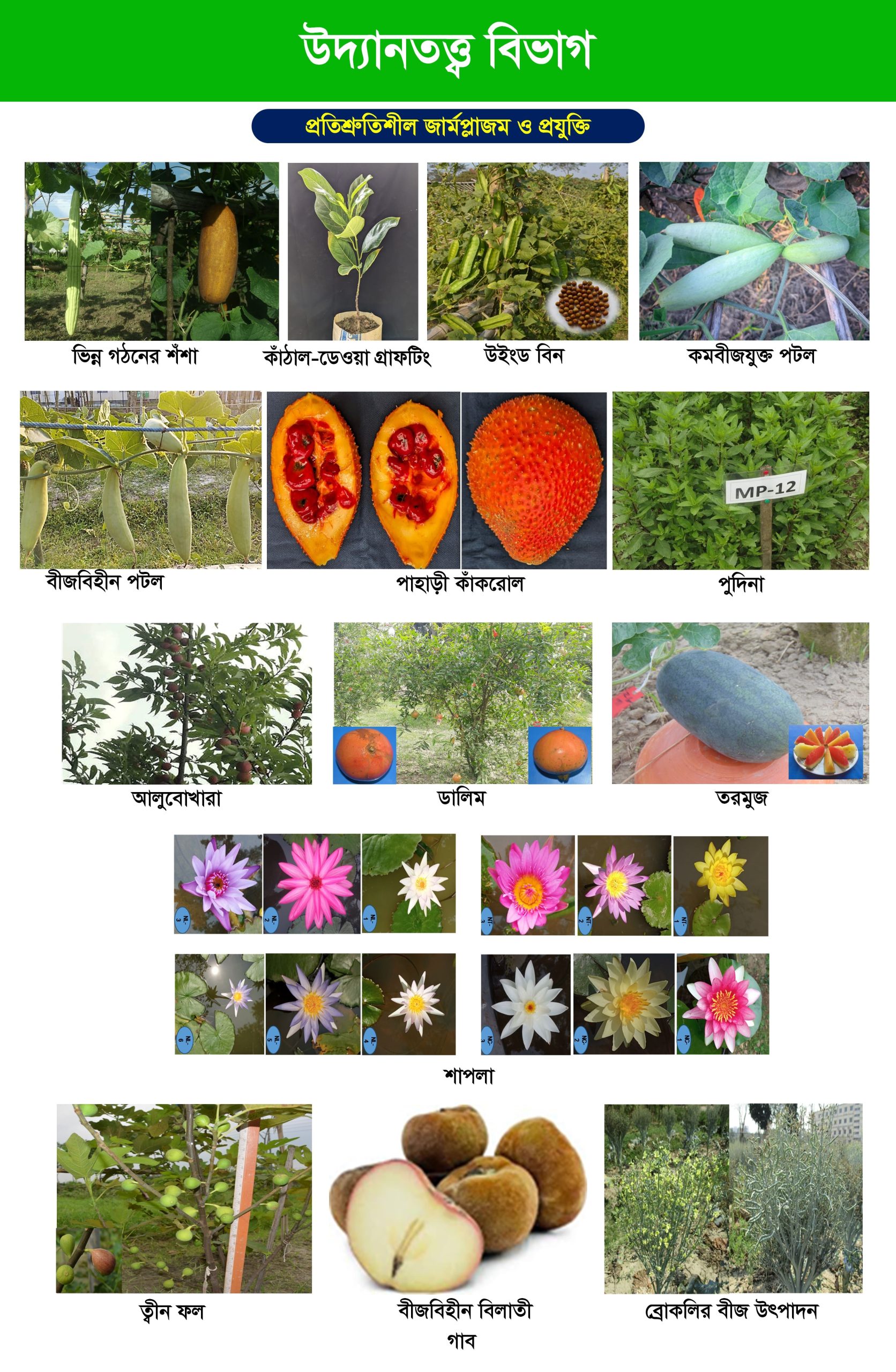
A. Varieties and Technologies
Different Laboratories, Fields, and Research Facilities

